ผู้ผลิตมืออาชีพ ตั้งแต่ 2552.
กระจายกลิ่นรักไปทั่วโลก.


ไทย
หมวดหมู่
บล็อกใหม่
วิธีเลือกเครื่องกระจายกลิ่นหอมที่เหมาะสมสำหรับพื้นที่เชิงพาณิชย์ของคุณ: คู่มือการซื้อฉบับสมบูรณ์ August 27 , 2026
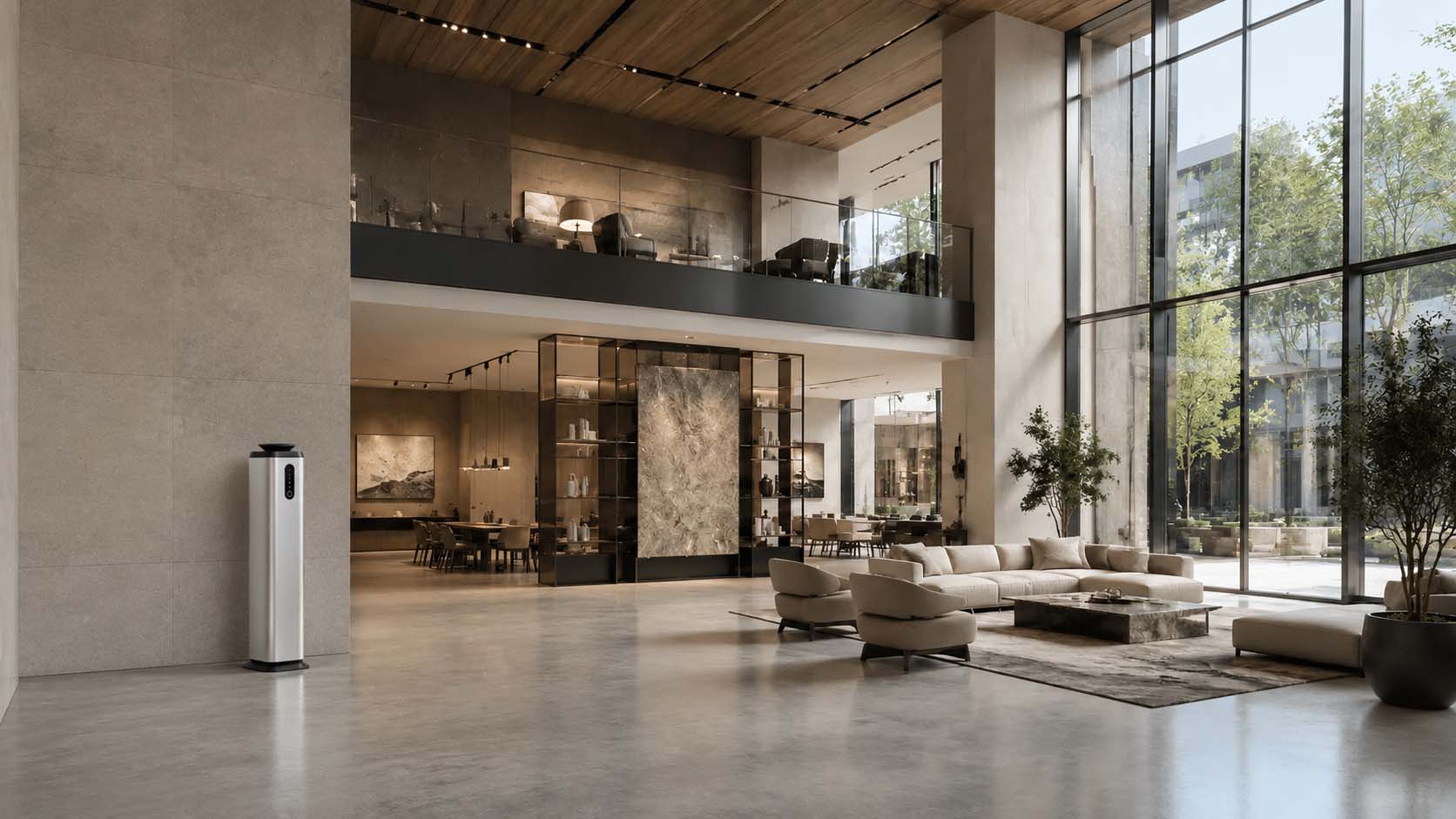
การเลือกเครื่องกระจายกลิ่นสำหรับใช้ในเชิงพาณิชย์นั้นไม่ใช่แค่การเลือกดูรุ่นที่มีการเผยแพร่ข้อมูลว่ามีพื้นที่การกระจายกลิ่นครอบคลุมมากที่สุดเท่านั้น
ล็อบบี้โรงแรม ร้านบูติกแฟชั่น แผนกต้อนรับสำนักงาน ฟิตเนสคลับ โชว์รูม และศูนย์การค้า อาจมีพื้นที่ใช้สอยใกล้เคียงกัน แต่มีความสูงของเพดาน รูปแบบการไหลเวียนของอากาศ เวลาทำการ ข้อจำกัดด้านเสียง และกฎเกณฑ์การติดตั้งที่แตกต่างกันอย่างสิ้นเชิง
เครื่องพ่นกลิ่นที่เหมาะสมจะต้องเข้ากับตัวอาคารและกลยุทธ์ด้านกลิ่นด้วย
คู่มือนี้ให้กระบวนการที่เป็นประโยชน์แก่ผู้ประกอบการโรงแรม ผู้ค้าปลีก ผู้จัดการทรัพย์สิน ผู้จัดจำหน่าย และทีมจัดซื้อ ในการเลือกเครื่องกระจายกลิ่นเชิงพาณิชย์โดยไม่ต้องเลือกอุปกรณ์ที่มีขนาดใหญ่เกินไปหรือมองข้ามต้นทุนการดำเนินงาน
ควรเลือกซื้อเครื่องกระจายกลิ่นเชิงพาณิชย์หลังจากตรวจสอบข้อมูลทั้งหกข้อครบถ้วนแล้ว:
บริเวณหรือโซนที่ต้องการฉีดน้ำหอมอย่างแม่นยำ
ปริมาตรลูกบาศก์ของบริเวณนั้น
อากาศเข้า ออก และผ่านเข้าไปในพื้นที่ได้อย่างไร
ควรติดตั้งแบบตั้งพื้น ติดผนัง หรือเชื่อมต่อกับระบบปรับอากาศ (HVAC)
ตารางการทำงานที่ต้องการ ระดับเสียง และวิธีการควบคุม
ปริมาณการใช้น้ำมันหอมระเหยที่คาดการณ์ไว้ ภาระงานบำรุงรักษา และต้นทุนรวม
บทความที่ตีพิมพ์เผยแพร่มีประโยชน์สำหรับการคัดเลือกรายชื่อผู้ที่เหมาะสม แต่ไม่สามารถใช้ทดแทนการสำรวจพื้นที่หรือการตรวจสอบหน้างานได้
เริ่มต้นด้วยวัตถุประสงค์ของโครงการมากกว่าตัวเครื่องจักร
วัตถุประสงค์ที่แตกต่างกันอาจต้องใช้แผนการให้กลิ่นที่แตกต่างกัน:
โรงแรมอาจต้องการสร้างความประทับใจแรกพบที่สอดคล้องกันตั้งแต่บริเวณล็อบบี้หลัก
ผู้ค้าปลีกอาจต้องการสร้างบรรยากาศที่บ่งบอกถึงแบรนด์ได้อย่างชัดเจนบริเวณทางเข้าและพื้นที่ขายสินค้า
สำนักงานอาจต้องการสร้างบรรยากาศการต้อนรับที่ไม่ฉูดฉาดเกินไป โดยไม่รบกวนพื้นที่ทำงานส่วนบุคคล
โชว์รูมอสังหาริมทรัพย์อาจต้องการกลิ่นหอมในระหว่างการนำเสนอ แต่ไม่จำเป็นต้องใช้ในเวลากลางคืน
สถานเสริมความงามอาจต้องการการทำงานที่เงียบสงบและระดับความดังเสียงที่ต่ำกว่าในบริเวณใกล้ห้องทำทรีตเมนต์
ผู้ประกอบการที่มีสาขาหลายแห่งอาจให้ความสำคัญกับการตั้งค่าที่เป็นมาตรฐานและขั้นตอนการทำงานของพนักงานที่ไม่ซับซ้อน
เขียนประโยคเดียวเพื่ออธิบายผลลัพธ์ที่ต้องการ ตัวอย่างเช่น:
สร้างกลิ่นหอมอ่อนๆ ที่สม่ำเสมอทั่วบริเวณแผนกต้อนรับและพื้นที่รอคอยขนาด 600 ตารางเมตร ในช่วงเวลาทำการ โดยไม่ให้กลิ่นเล็ดลอดเข้าไปในห้องประชุมที่อยู่ติดกัน
วิธีนี้มีประโยชน์มากกว่าการขอ "เครื่องสร้างกลิ่นที่มีประสิทธิภาพสูง"
การเลือกใช้หัวกระจายลมสำหรับใช้ในเชิงพาณิชย์ ควรเริ่มต้นจากปริมาตรของห้อง:
ปริมาตรของพื้นที่ = ความยาว × ความกว้าง × ความสูงเฉลี่ยของเพดาน
ตัวอย่างเช่น ร้านค้าที่มีขนาด 20 เมตร x 10 เมตร และเพดานสูง 4.5 เมตร จะมีปริมาตรพื้นที่เปิดโล่งโดยประมาณเท่ากับ:
20 × 10 × 4.5 = 900 ลูกบาศก์เมตร
สถานที่สองแห่งที่มีพื้นที่ใช้สอยเท่ากัน 200 ตารางเมตร อาจต้องการอุปกรณ์ที่แตกต่างกัน หากแห่งหนึ่งมีเพดานสูง 3 เมตร และอีกแห่งมีโถงกลางสูง 7 เมตร
บันทึกข้อมูลมากกว่าแค่ตัวเลขในหัวข้อข่าว รวมถึง:
พื้นที่เปิดโล่งและพื้นที่ปิดล้อม
ชั้นลอยและห้องโถงกลาง
บันไดที่เชื่อมต่อชั้นต่างๆ
ห้องลองเสื้อหรือห้องส่วนตัว
ประตูภายนอกที่เปิดบ่อย
พื้นที่ที่กั้นด้วยกำแพงสูงเต็มความสูง
พื้นที่ที่ควรปราศจากกลิ่น
อย่ารวมห้องทุกห้องเข้าเป็นยอดรวมเดียวโดยอัตโนมัติ ห้องทำงานปิดและล็อบบี้เปิดอาจต้องมีการควบคุมแยกต่างหาก แม้ว่าจะเป็นส่วนหนึ่งของอาคารเดียวกันก็ตาม
กลิ่นหอมจะเคลื่อนที่ไปตามอากาศ แผนผังห้องเพียงอย่างเดียวไม่สามารถแสดงให้เห็นว่ากลิ่นจะกระจายไปอย่างไร
ระหว่างการสำรวจพื้นที่ ให้ระบุสิ่งต่อไปนี้:
ตะแกรงจ่ายและรับอากาศของระบบปรับอากาศ (HVAC)
ตารางการรับอากาศบริสุทธิ์
พัดลมระบายอากาศ
ประตูหมุน ประตูเลื่อน หรือประตูที่เปิดค้างไว้ตลอดเวลา
บันไดเลื่อน บริเวณโถงลิฟต์ และบันได
ทางเข้าที่มีผู้คนสัญจรหนาแน่น
พัดลมขนาดใหญ่หรือม่านอากาศ
ฉากกั้นและชั้นวางของสูง
ขอบเขตของบริการอาหารหรือห้องครัว
ตำแหน่งงานของพนักงานและที่นั่งระยะยาว
ล่าสุดมาตรฐาน ANSI/ASHRAE 62.1-2025เนื้อหาครอบคลุมถึงการระบายอากาศ การกรอง การควบคุม การใช้งานอาคาร และการบำรุงรักษาเพื่อให้ได้คุณภาพอากาศภายในอาคารที่ยอมรับได้ ฉบับปี 2025 มีการปรับปรุงข้อกำหนดเกี่ยวกับการระบายอากาศแบบควบคุมตามความต้องการ ซึ่งมีความสำคัญเนื่องจากการไหลของอากาศสามารถเปลี่ยนแปลงได้ตามจำนวนผู้ใช้งานและตารางเวลาของระบบ
เครื่องกระจายกลิ่นต้องทำงานร่วมกับระบบไหลเวียนอากาศของอาคาร แต่ไม่ได้ให้อากาศบริสุทธิ์ กำจัดมลพิษ หรือทดแทนการระบายอากาศแนวทางปัจจุบันของสำนักงานคุ้มครองสิ่งแวดล้อมแห่งสหรัฐอเมริกา (US EPA) เกี่ยวกับคุณภาพอากาศภายในอาคารระบุว่าการควบคุมแหล่งกำเนิดมลพิษ การระบายอากาศ และการกรองหรือการทำความสะอาดอากาศ เป็นกลยุทธ์หลักในการปรับปรุงคุณภาพอากาศภายในอาคาร
หากพื้นที่ใดมีปัญหาเรื่องควัน ความชื้น เชื้อรา การระบายน้ำ เศษอาหาร หรือการระบายอากาศ ควรตรวจสอบต้นตอของปัญหาเหล่านั้นก่อน ไม่ควรใช้น้ำหอมเพื่อปกปิดปัญหาของอาคารที่ยังแก้ไขไม่ได้
รูปแบบหลักๆ ได้แก่ ระบบแบบตั้งพื้น ระบบแบบติดผนัง และระบบที่เชื่อมต่อกับระบบปรับอากาศ (HVAC)
เครื่องใช้ไฟฟ้าแบบตั้งพื้นสามารถวางบนพื้น ชั้นวาง หรือพื้นผิวเฟอร์นิเจอร์ที่มั่นคงได้ โดยปกติแล้วรูปแบบนี้ติดตั้งและเคลื่อนย้ายได้รวดเร็วที่สุด
สิ่งเหล่านี้มีประโยชน์เมื่อ:
สถานที่ดังกล่าวจำเป็นต้องมีการทดสอบนำร่อง
ไม่สามารถเข้าถึงท่อได้
พื้นที่เป้าหมายต้องการการควบคุมที่เป็นอิสระ
ผู้เช่าไม่สามารถดัดแปลงอาคารได้
ผังพื้นมีการเปลี่ยนแปลงอยู่บ่อยครั้ง
สามารถติดตั้งอุปกรณ์ได้อย่างมั่นคง
ข้อจำกัด ได้แก่ ทัศนวิสัย เสียงรบกวนในบริเวณใกล้เคียง การจัดการสายไฟ และความเป็นไปได้ที่กลิ่นหอมจะเข้มข้นขึ้นบริเวณใกล้กับตัวเครื่อง
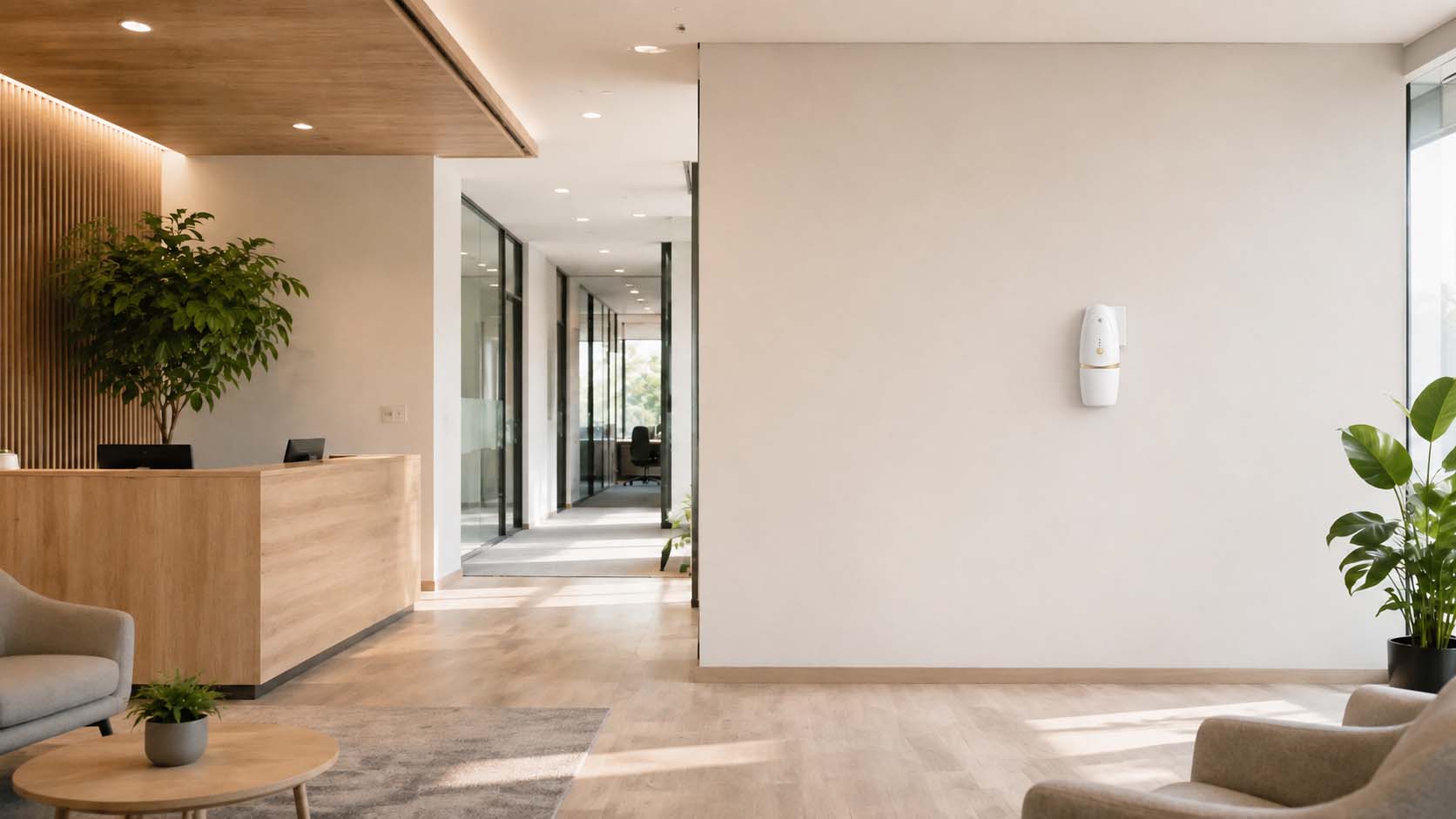
อุปกรณ์ติดผนังช่วยให้เคาน์เตอร์และพื้นดูสะอาดตา เหมาะสำหรับสำนักงาน ทางเดิน ห้องน้ำ พื้นที่ค้าปลีกขนาดเล็ก และบริเวณต้อนรับ หากมีตำแหน่งผนังและแหล่งจ่ายไฟที่เหมาะสม
ตรวจสอบให้แน่ใจว่าอุปกรณ์จะไม่ถูกกีดขวางด้วยเฟอร์นิเจอร์ ม่าน สินค้า ประตู หรือแถวลูกค้า นอกจากนี้ยังควรสามารถเข้าถึงได้ง่ายสำหรับการเปลี่ยนถ่ายน้ำมันและการบำรุงรักษา
An HVAC scent diffuser introduces fragrance into compatible building airflow for broader distribution.
This can suit large permanent spaces when:
The intended area matches a controllable HVAC zone
Equipment should remain outside the customer area
The duct route and injection position are suitable
Facility staff can provide service access
The building owner and engineering team approve the installation
Do not connect tubing to an arbitrary supply or return duct. A qualified building or HVAC professional should review airflow direction, pressure, shared zones, filtration, operating hours, and the risk of fragrance reaching unintended areas.
Coverage should be only one line in the comparison.
Commercial equipment should allow the operator to reduce or increase output through controlled work and pause periods. The available range should be suitable for the smallest intended setting, not only maximum output.
Check whether the machine supports daily time periods, different days of the week, automatic restart, and an easy method for returning to approved settings.
Noise matters in spas, meeting areas, quiet retail environments, VIP lounges, and reception desks. Ask how the published noise figure was measured and assess the sample in the actual placement position.
A larger bottle can reduce refill frequency, but it also increases the amount of oil stored in the device. Select capacity using operating hours, tested consumption, access frequency, and staff responsibility.
Possible options include buttons, touch controls, Bluetooth, Wi-Fi, or an App. More connectivity is useful only if the customer can support account management, permissions, updates, network access, and staff training.
Public-facing equipment may need a lock, hidden controls, secure oil access, or placement outside customer reach.
Confirm how staff reach the oil bottle, atomizer, tubing, seals, filter, and power connection. A concealed installation still needs convenient service access.
The following framework helps narrow the format before comparing individual models.
| Commercial Space | Main Buying Priority | Typical Starting Format |
|---|---|---|
| Large hotel lobby | Broad coverage, quiet operation, premium appearance | Floor-standing or reviewed HVAC solution |
| Fashion or lifestyle retail | Local control, flexible placement, brand presentation | Standalone commercial diffuser |
| Office reception | Subtle output, low noise, simple maintenance | Compact standalone or wall-mounted diffuser |
| Showroom or sales center | Scheduling, visible design, changing occupancy | Floor-standing diffuser |
| Spa or wellness reception | Quiet operation, low minimum output | Compact or wall-mounted diffuser |
| Large multi-zone property | Independent zones and centralized distribution | Multiple standalone units or engineered HVAC plan |
These are starting points, not automatic prescriptions.
TheDANQ M63 floor-standing scent diffuseris designed for large commercial areas. Current company materials publish a 1,000 ml bottle, standalone installation, low-noise operation, and coverage up to 4,000 m³.
That published figure should be used to shortlist the model, not to guarantee performance in every 4,000 m³ property. A high-ceiling lobby with open doors and strong fresh-air supply may perform differently from an enclosed showroom of the same volume.
The Q1000PRO is part of DANQ’s commercial scent equipment range and can be considered for retail, hospitality, office, and other project environments.
Because final selection depends on the current model configuration, request the latest Q1000PRO specification sheet, installation options, oil capacity, control functions, noise conditions, consumption estimate, and model-specific documents before purchase.
The S915 is a wall-mounted plug-in model designed to keep floor and counter space clear. DANQ product materials describe waterless operation, Bluetooth control, and quiet performance.
Confirm the plug standard, mounting orientation, coverage requirement, lowest output, oil capacity, and service access for the destination market and intended location.
Unit price does not show the full cost of a commercial scent program.
Compare:
Equipment price
Installation or electrical work
Fragrance-oil consumption
Oil price and shipping classification
Refill and cleaning labor
Atomizer cores, seals, tubing, and other wear parts
App or remote-management requirements
Staff training
Replacement equipment or downtime allowance
Freight, duties, and local taxes
A basic operating estimate can use:
Monthly oil cost = tested hourly consumption × daily operating hours × operating days × oil price
Do not use maximum-output consumption if the approved program runs at a much lower duty cycle. Test with the selected fragrance because viscosity and volatility can affect atomization and consumption.
Also compare labor. A lower-priced device that needs frequent local attention may cost more across 30 or 100 locations than equipment with a longer, predictable refill cycle.
The machine, oil, and settings operate as one system.
Before approving bulk oil or equipment, verify:
Atomization stability
Fragrance character after diffusion
Residue around the outlet
Compatibility with tubing, seals, and the atomizer
Consumption under the proposed schedule
Performance after extended operation
Required cleaning interval
A fragrance that smells balanced on a blotter may change after diffusion. Highly volatile notes may dominate first, while heavier materials can affect persistence and maintenance.
Request the current Safety Data Sheet and other documents required for the exact oil, application, and destination market. Do not assume that one fragrance document covers every formula or that every oil is compatible with every diffuser.
Start below the expected final setting and increase gradually.
A useful pilot should include:
Installation during normal building operation
An agreed starting work and pause cycle
Checks at the entrance, center, boundaries, and staff positions
Review during quiet and busy periods
Oil-level and maintenance records
Customer and staff feedback
A documented final setting
Use a simple intensity scale such as:
Absent
Subtle
Noticeable
Strong
Uncomfortable
Ask new arrivals as well as employees. Staff may become less aware of the fragrance after extended exposure.
If the scent reaches restaurants, treatment rooms, neighboring tenants, private offices, or other unintended areas, adjust placement, output, zoning, or operating periods before adding more equipment.
Provide enough information for a project-specific recommendation.
Your RFQ should include:
Country and destination market
Type of commercial property
Floor plan and photographs
Length, width, and ceiling height
Target scenting zones
Areas that must remain unscented
HVAC information and operating schedule
Door and traffic conditions
Required installation format
Daily business hours
Noise expectations
Preferred control method
Fragrance direction
Estimated number of locations
Sample requirements
OEM/ODM requirements
Required model-specific documents
Avoid asking only, “Which machine covers 1,000 square meters?” The supplier needs volume, airflow, zoning, and operating information to make a useful recommendation.
Before approving the purchase order, confirm:
Approved model and hardware revision
Installation method and placement drawing
Voltage, adapter, and plug standard
Oil bottle and atomizer configuration
Fragrance code and approved sample
Initial operating schedule
Cleaning and refill procedure
Spare-parts list
Warranty and after-sales process
Packaging and accessories
Logo, color, or App customization
Current model-specific compliance documents
Pre-shipment inspection criteria
Change-control process
Certification claims should always be verified by exact model and destination. A document for another SKU or an earlier hardware version may not apply to the equipment being ordered.
Calculate the cubic volume using length × width × average ceiling height. Then evaluate airflow, doors, HVAC schedules, zoning, and fragrance intensity before choosing the final model.
No. An oversized machine may create an uncomfortable hot spot, short work cycles, higher cost, or unnecessary noise. The lowest controllable output is important in smaller or quiet spaces.
Choose standalone equipment for flexible placement, pilots, and independent local control. Consider HVAC integration for large permanent zones only after the building system and shared airflow have been reviewed.
A fragrance system is not a substitute for source control, cleaning, ventilation, filtration, moisture correction, or building maintenance. Resolve the source of persistent odors first.
The interval depends on the model, oil, schedule, environment, and operating hours. Follow the model-specific instructions and record refills, cleaning, consumption, and component replacement.
Send the property type, dimensions, ceiling height, HVAC information, doors, business hours, installation restrictions, fragrance direction, destination market, and expected quantity.
The best commercial scent diffuser is not automatically the machine with the highest output. It is the system that delivers controllable fragrance across the intended zone while remaining practical to install, operate, refill, clean, and support.
Measure cubic volume, map airflow, compare installation formats, calculate operating cost, and test the selected machine with the selected fragrance in the real property.
DANQ ผลิตอุปกรณ์กระจายกลิ่นมาตั้งแต่ปี 2009 และให้การสนับสนุนโครงการต่างๆ ในภาคธุรกิจเชิงพาณิชย์ ระบบปรับอากาศ บ้าน ยานยนต์ น้ำมันหอมระเหย และ OEM/ODM ผู้ซื้อสามารถขอคำแนะนำเกี่ยวกับรุ่นต่างๆ แคตตาล็อกผลิตภัณฑ์ ใบเสนอราคา ตัวอย่างอุปกรณ์ และตัวอย่างน้ำหอมได้
ติดต่อ DANQ Aroma เพื่อขอคำแนะนำเกี่ยวกับเครื่องกระจายกลิ่นหอมสำหรับใช้ในเชิงพาณิชย์

ผู้ผลิตมืออาชีพ ตั้งแต่ 2552.
กระจายกลิ่นรักไปทั่วโลก.


Guangzhou DANQ Environmental Technology Co.,LTD